# What Are the Best Boston Neighborhoods for Walkability, Food, and Old-City Charm?
Key Takeaways
•The best neighborhoods in Boston, MA for walkability are Beacon Hill and Back Bay — places where you can reach coffee, dinner, and historic streets on foot, no car keys required.
•Walkability, food, and old-city charm now drive long-term value. Beacon Hill and Back Bay both rate among the most walkable neighborhoods in the city, according to Walk Score.
•Scarcity is the moat. Strict preservation rules and almost no buildable land keep supply tight, which is why these enclaves hold value when headlines wobble.
•The catch: prices are steep and inventory is thin. Buyers stretch for these streets because the daily lifestyle is hard to find anywhere else.
Everyone keeps pointing to the places where new towers are rising.
But in Boston, the streets that win people over are usually not new at all.
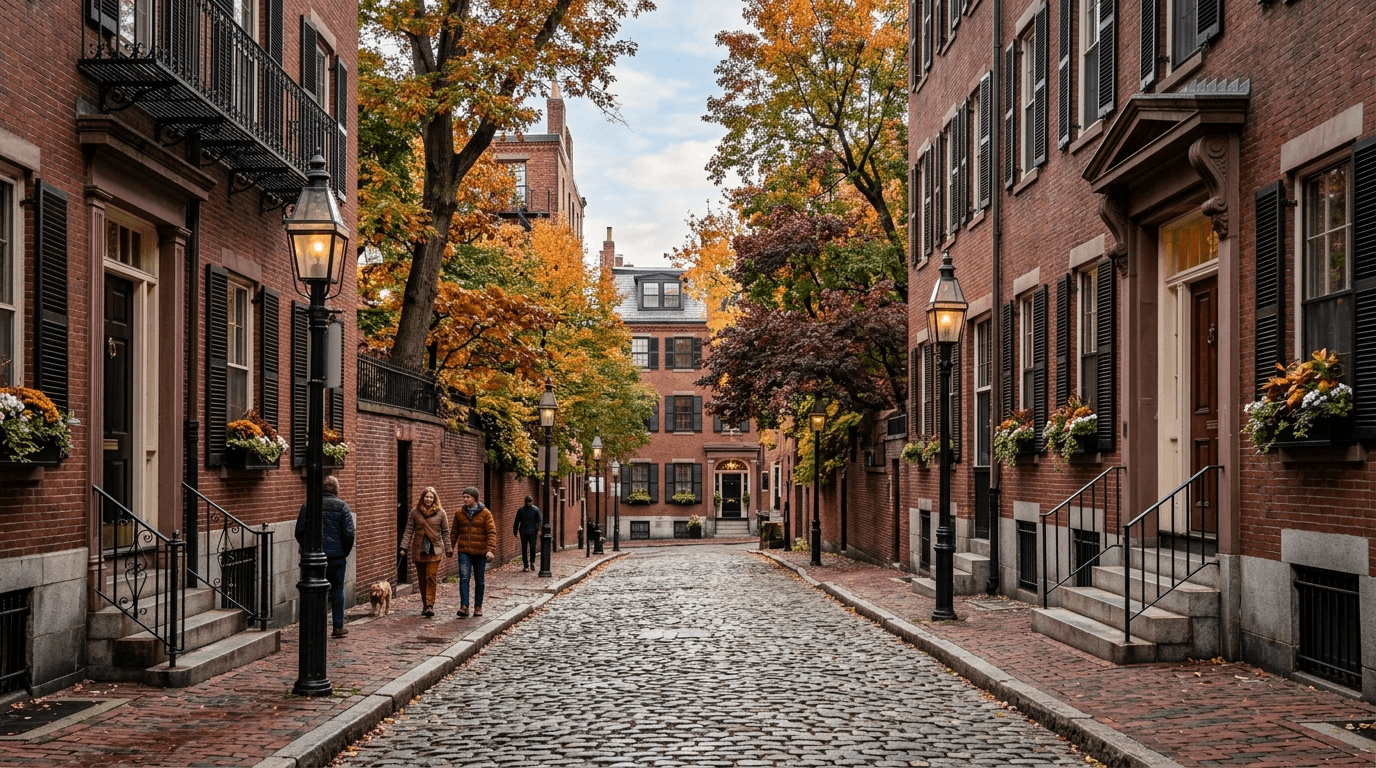
They are the ones where you can walk to a croissant, cut through a historic lane, and sit down to dinner without touching your keys.
If you are asking, "Where are the best Boston neighborhoods for walkability, food, and old-city charm?" the answer starts here: Beacon Hill and Back Bay.
As of June 18, 2026, the spring market is easing into summer. Buyers are not just purchasing square footage anymore — they are buying a daily rhythm. Coffee nearby. Dinner nearby. History outside the front door.
Limited supply plus daily convenience equals a neighborhood that holds value when headlines wobble.
Here is the livable, local breakdown.
1. Why Does Beacon Hill Still Set the Standard for Walkability?
Beacon Hill rates as one of the most walkable neighborhoods in Boston, according to Walk Score.
A Walk Score is a 0–100 rating that measures how many daily errands you can complete without a car. A high score means almost everything you need is a short walk away — and that matters more than most buyers realize until they are living it.
Step outside for coffee, groceries, dinner, the Common, or a quiet evening stroll without once planning your day around parking. That is what a high Walk Score actually buys you.
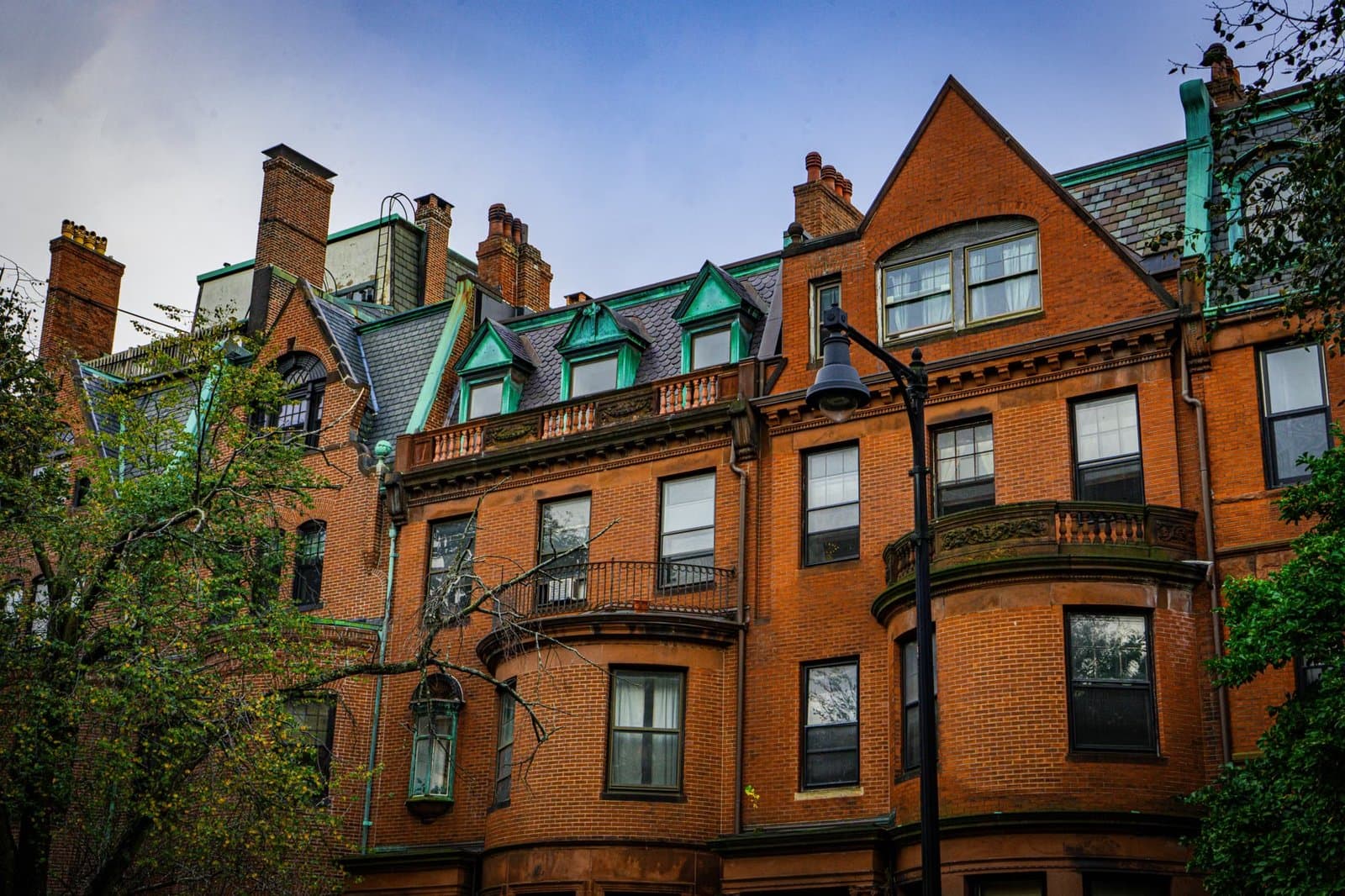
Beacon Hill also delivers the old-city charm people picture when they think of Boston. Brick row houses, narrow gas-lit lanes, a streetscape that took centuries to build — this is the kind of character no developer can recreate on a blank lot.
Historic preservation rules protect the look and feel of the neighborhood. In plain terms, those rules limit what can be torn down or changed. That keeps Beacon Hill beautiful. It also keeps supply tight. And when supply is tight in a place people deeply want, values tend to hold up better when the broader market gets shaky.
One thing worth being clear about: the historic streets themselves are a public good — anyone can walk them. What buying provides is something different. Stability. Equity. A permanent foothold in a neighborhood where new supply is effectively capped.
2. Why Is Back Bay the Gold Standard for Walk-to-Dinner Living?
Back Bay is the other clear winner.
It also rates among Boston's most walkable neighborhoods, according to Walk Score, with strong transit access layered on top. But the real value is how easy daily life feels once you are actually living there.
Victorian brownstones line Commonwealth Avenue. Newbury Street puts coffee, shopping, and restaurants within a few minutes' walk. The Charles River Esplanade sits nearby. Copley, Prudential, and major employers are all within reach.
Beautiful streets. Great food. Easy errands. Strong resale appeal. For many buyers, that combination is the dream — and buyers pay more for what they feel every single day.
That shows up in the numbers across core downtown Boston neighborhoods, detailed in the table in Section 5 below.
So what does that mean for you? If you buy in a top walkable area, you are not only paying for a home. You are paying for a location that many future buyers are likely to want just as much.
One honest limit worth noting: the appreciation data here is measured across the core downtown neighborhoods as a group, not Back Bay or Beacon Hill in isolation. No neighborhood-specific appreciation figure is shown. What sets these two apart is not a separate price trend — it is the combination of preservation-capped supply and the walk-to-everything lifestyle. That overlap keeps demand concentrated on their specific blocks.
3. Why Does Boston's History Make These Neighborhoods So Hard to Copy?
Boston's street grid was built before cars. That single fact explains why the downtown core feels so fundamentally different from newer cities.
You are not walking through a planned lifestyle district. You are walking through the original fabric of the city — streets that were laid out when people moved on foot, and that still reward it.
The Freedom Trail links a series of historic sites into one continuous pedestrian route, according to the Freedom Trail Foundation, running straight through the heart of this old-city environment.
That history is a public good. Anyone can walk the trail and absorb the character of these streets without owning a home here. So what does ownership actually buy? Not access to the history — that is free. It buys the ability to wake up inside it every day. It buys equity in a fixed-supply location. And it lets you make a home your own in a neighborhood where the surrounding fabric simply cannot be rebuilt.
There is also a timely backdrop in 2026. A wave of historic landmarks is reopening across the country ahead of the nation's 250th anniversary. Against that setting, Boston's living-history streets feel more relevant this summer than they have in years.
4. Why Is the Food Scene Such a Big Part of the Value?
The real test of walkability is not a score. It is whether your life actually gets easier.
Can you grab coffee without driving? Meet friends for dinner without dealing with parking? Run errands and still enjoy the walk home? In Beacon Hill and Back Bay, the answer is usually yes.
Charles Street in Beacon Hill and Newbury Street in Back Bay turn routine errands into part of the lifestyle. Local businesses become your habits — your coffee shop, your dinner spot, your corner store, your favorite block.
Within these two neighborhoods, a few examples show the range you can reach on foot:
•Vintage Taste — consignment shopping in Back Bay
•Vico Style — a vintage store in Beacon Hill
The wider downtown core adds even more nearby, though some of it is a short transit ride or a longer walk away:
•KAVA Neo-Taverna — Greek tapas and wines in the South End (a short trip from Back Bay)
•Blind Duck — a speakeasy bar inside Raffles Boston (downtown, reachable by transit)
This is where the emotional value shows up. A home becomes more than rooms and finishes. It becomes a way to live that people do not want to give up.
5. Why Do These Streets Hold Value When the Market Wobbles?
Spring 2026 set the tone for June. Inventory remains tight. Prime addresses still move quickly. Competition is most focused in the pockets buyers trust most — and Back Bay and Beacon Hill are two of those pockets.
Here is how the core downtown numbers compare year over year, including median price, closed sales, days on market, and the percentage change for each. The table covers core downtown Boston neighborhoods as a group, across all property types.
Core Downtown Boston Year-over-Year Market Metrics
Compares median sales price, closed home sales, and days on market for core downtown Boston through June 2, 2025 versus through June 2, 2026.
| Category | Thru 6/2/2025 | Thru 6/2/2026 | Change |
|---|---|---|---|
| Median sales price | $1,012,500 | $1,152,750 | +13.85% |
| Closed home sales | 1,024 | 926 | −9.57% |
| Days on market | 50 | 52 | +2 days |
The median sold price climbed 13.85% year over year, from $1,012,500 in 2025 to $1,152,750 in 2026.
Closed home sales, meanwhile, fell 9.57% — from 1,024 in 2025 to 926 in 2026. Fewer homes changed hands even as prices rose.
That combination deserves an honest read. A drop in closed sales can signal softening demand, and in some markets, that is exactly what it means. But here, it lines up with a different story: prices rose at the same time. When prices climb while volume falls, the more likely driver is a shortage of homes to buy, not a shortage of buyers. Fewer owners are listing in a supply-capped market, so fewer sales close — and the homes that do trade command more.
That is the pattern these preservation-locked neighborhoods are built to produce.
Fewer homes for sale + firm prices + premium location = stronger price support.
For your wallet, that means you are not just paying for charm. You are paying for scarcity. And in Boston, scarcity tends to support value over time. That said, it is not a guarantee — which is exactly why price discipline still matters even in a tight market. Scarcity protects a fairly priced purchase. It does not rescue an overpriced one.
What Are the Strongest Arguments Against Beacon Hill and Back Bay?
Fair question. These neighborhoods are not the right fit for everyone.
Objection 1: Boston transit can be unreliable, so the "car-free dream" is overstated.
That is a legitimate point. Many riders describe the subway and bus system as unpredictable. Delays are real, and service issues are frustrating.
But that is precisely why Beacon Hill and Back Bay stand out. Their value is not built on transit — it is built on needing transit less often. Dinner, coffee, shopping, parks, and historic streets are already close by. You may still use the T, but your daily life is not built around waiting for it.
Worth noting: walkability is not unique to these two neighborhoods. Cambridge, Somerville, the South End, and Fenway are walkable, too. What concentrates demand on Beacon Hill and Back Bay is a rarer overlap — top-tier walkability and a fixed, preservation-capped historic core. That combination is the premium buyers are paying for, and it is the part cheaper alternatives cannot fully match.
Objection 2: These neighborhoods are simply too expensive.
Also true. Affordability is the biggest wall.
As a general benchmark, citywide single-family homes carry a median sold price of $1,572,250 over the last 180 days. (No Beacon Hill or Back Bay condo-specific median is shown here, so treat this as a loose citywide proxy rather than a neighborhood figure.)
Boston Housing Market Snapshot by Property Type (Last 180 Days)
A primary MLS snapshot comparing median days on market, months of inventory, and median sold price across Boston property segments over the last 180 days.
Single-Family
Median DOM90
Months of Inventory11.7
Median Sold Price1,572,250
Condo
Median DOM8
Months of Inventory22.4
Median Sold Price660,000
Mixed
Median DOM15
Months of Inventory20.8
Median Sold Price935,000
Source:Repliers / MLSPIN
For many buyers, prices at this level are not realistic — and it is worth being direct: the neighborhoods this article recommends often sit at or above that benchmark. The argument here is not that these homes are affordable. It is that, for buyers who can reach them, the lifestyle and supply dynamics make the premium more durable than it would be elsewhere.
One more supply signal worth watching: Boston's historic preservation rules, combined with almost no buildable land in these neighborhoods, mean new construction is effectively capped. That structural limit on supply is the most reliable reason these enclaves stay scarce — and why owners tend to feel protected in these locations.
What Do Locals Say About Living There?
The local mood is admiring, but grounded.
People praise both neighborhoods as beautiful, historic, and genuinely walkable. A common refrain is simple: "Boston is very walkable." But the pushback is honest, too.
Back Bay can feel crowded and tourist-heavy. Beacon Hill's hills and steps are charming — and not always easy to navigate. And the prices can be a shock. Locals often warn that the most desirable blocks command a steep premium over the rest of the metro.
Cambridge, Somerville, the South End, and Fenway come up regularly as alternatives, and they can be smart options — especially if your budget is tighter. But if your top priorities are walkability, food, and old-city Boston charm, Beacon Hill and Back Bay still sit at the top.
So, Which Boston Neighborhoods Should You Focus On?
For the strongest blend of walkability, dining, and historic character, start here:
1. Beacon Hill
Best for old-city charm, quiet streets, historic homes, and a near-perfect walkable lifestyle.
2. Back Bay
Best for restaurants, shopping, brownstone beauty, transit access, and strong long-term demand.
They are expensive. They are competitive. Inventory is thin. But that is also the point.
Prime, walkable, historic homes in Boston are finite. You cannot build more Beacon Hill. You cannot recreate Back Bay's best blocks from scratch.
For June 2026, the buyer playbook needs to balance two ideas that can sound contradictory: act fast, but do not overpay. Here is how they fit together.
Move quickly on the search — get pre-approved, tour fast, and be ready to make an offer when the right home appears, because good inventory does not sit. But stay disciplined on the price. Set a number that works for you before you tour. If a bidding war pushes past it, walk away. Scarcity supports a fair price. It does not justify any price.
"Their strongest position is to be willing to walk away if the numbers no longer work." — Victor Currie, Douglas Elliman
Urgency governs how you search. Discipline governs what you pay. The two work on different parts of the decision — and you need both.
The best Boston neighborhoods are not always the newest. They are the ones where you can live beautifully without reaching for your keys.
If you want to compare Beacon Hill, Back Bay, South End, Fenway, Cambridge, and Somerville by budget and lifestyle fit, ask for a neighborhood-by-neighborhood breakdown before you start touring.